Give Old Speakers a Second Life With a Bluetooth Adapter
Turn old bookshelf speakers into Bluetooth speakers with the right adapter or amp: powered vs passive, codecs, hiss, and three budget picks.
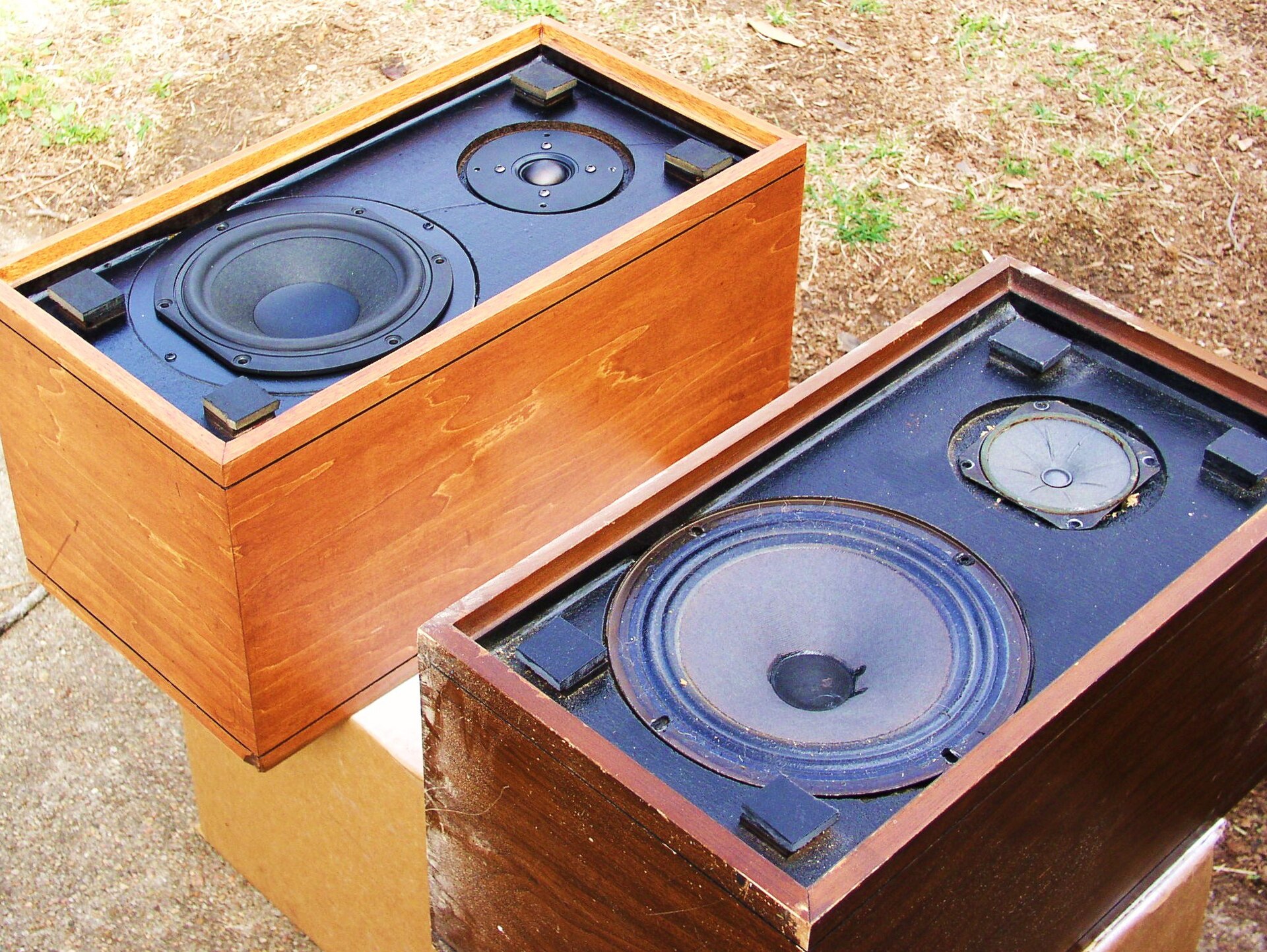
Photo: John P Salvatore · CC0 · source
The bookshelf speakers on the wooden shelf came from your father’s den: 1980s walnut veneer, cloth grilles, and a heft that modern plastic boxes can’t fake. The receiver that powered them died years ago, your music lives on a phone now, and so a genuinely good pair of speakers has been sitting there — orphaned, looking distinguished, playing nothing.
A box the size of a deck of cards fixes this. Plug a Bluetooth adapter into an aux or RCA input, pair your phone, and suddenly your streaming apps are running through forty-year-old drivers that still sound warmer than anything new in this price class. That’s the powered-speaker version. Passive speakers — the kind with plain speaker wire — need one more piece: an amp.
This is one of the highest value-per-dollar projects in audio, because the expensive part, the speakers, is already paid for. The whole decision comes down to one question you can answer in ten seconds.
What actually matters before you buy
- Identify powered versus passive first. Does each speaker plug into the wall, or share one power cord and a volume knob? That’s powered — it has an amplifier inside, and it needs only a Bluetooth receiver. Bare wire terminals mean passive, and passive speakers need an amplifier: an old receiver, or a new mini amp with Bluetooth built in.
- Match the inputs you actually have. Most adapters terminate in 3.5mm and include an RCA adapter, which covers nearly every receiver and powered speaker from the last few decades. Optical inputs, common on soundbars and AV receivers, are worth seeking out for their cleaner noise floor.
- Understand codecs without overpaying for them. SBC is the baseline and fine for casual listening; aptX improves things modestly on compatible Android phones. iPhones use AAC regardless of what the box advertises, so paying a premium for high-end codec support while streaming from an iPhone is money with no payoff.
- Hunt the noise floor before you commit. Cheap adapters can hiss on sensitive amps, and a volume knob on the adapter itself makes gain staging easier: keep the adapter high in the chain and control loudness downstream. Keep the adapter away from phone chargers and dimmer switches, which induce hum.
- Power it like it’s permanent. USB-powered adapters die with whatever port feeds them, and a TV’s USB output usually shuts off with the TV. For a setup that stays put, choose a wall-powered adapter; save battery-powered ones for porch and garden speakers.
- Check range and pairing behavior. Bluetooth 5.0 and later, based on published specifications, is rated for whole-room range and beyond. Multipoint pairing matters if two family phones will share the speakers, and a low-latency mode matters if this adapter will also feed a TV.
How to get more out of what you already own
Placement does more than any cable. Get the tweeters roughly at ear height in your listening seat, angle the speakers slightly inward, and pull rear-ported designs a few inches off the wall so bass doesn’t turn boomy. Symmetry counts more than perfection: two speakers the same distance from their side walls image better than one squeezed into a corner.
Then show the old hardware some respect. Scratchy volume pots on a vintage receiver come back to life with a shot of contact cleaner and a few vigorous twists. If your old receiver is dead except for its phono input, keep it — Bluetooth adapters don’t handle turntables, and that phono stage is the one thing your new setup can’t replace cheaply.
Cabling and habits finish the job. Use reasonable-gauge speaker wire with banana plugs so connections stay snug, and never run wire under a rug where the vacuum can find it. Set your source volume near maximum and do the fine adjustments at the amp or adapter — that’s the cleanest signal path. If cutting cords appeals beyond the shelf too, our budget noise-cancelling headphones guide is the natural next step, and more audio projects live in /category/audio/.
The picks, briefly
Two of the three picks below are receivers for powered speakers and amps with aux inputs; the third is the small amplifier that passive speakers have been waiting for.
1Mii B06 Plus Bluetooth Receiver
The easy first step for powered speakers or an amp with a spare aux input.
Best for: Powered speakers and old receivers with 3.5mm or RCA jacks.
- Supports aptX HD on compatible Android phones, per its published specifications
- Long-range Bluetooth — rated up to roughly 100 feet line of sight — plus a physical volume knob
- Hiss can surface on very sensitive amps, so mind the gain staging
- Charges over micro-USB, a dated cable to keep around
Fosi Audio BT20A Pro
The right tool if your old speakers are passive and have been silent for years.
Best for: Passive bookshelf speakers with bare wire terminals and no amp.
- A real class-D amplifier with Bluetooth built in — no separate receiver needed
- Compact chassis that runs cool and disappears on a shelf
- Only makes sense for passive speakers; powered speakers don't need an amp
- Bluetooth is the star input, so other sources may need extra adapters
Esinkin Wireless Audio Adapter
The cheapest way to find out whether the old speakers are worth the project.
Best for: Powered speakers with an aux or RCA jack and a minimal budget.
- Dead-simple setup with 3.5mm and RCA outputs in the box
- Powered over USB, so it tucks behind any shelf
- Standard Bluetooth codecs only — no aptX or LDAC, so there's a sound ceiling
- Plastic build with no volume control on the unit itself
FAQ
Will a Bluetooth adapter hurt my old speakers' sound quality?
Modestly at most. With aptX on a compatible Android phone the difference is hard to hear on bookshelf speakers, and standard codecs still outperform what most old drivers resolve anyway. Placement matters more.
Can I use a Bluetooth adapter with a turntable?
Not directly. Turntables need a phono preamp before any Bluetooth transmitter. Keep your old receiver for its phono input and connect the adapter to its aux or tape output.
Why does my setup hiss or hum?
Usually gain staging or power noise. Set the adapter's volume high and control loudness at the amp, move the adapter away from phone chargers, and avoid sharing a power strip with dimmer switches.